









January 1, 2001
Accolades
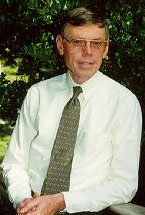 Patrick Mantey
Patrick Mantey, Jack Baskin Professor of Computer
Engineering, has been named a Fellow of the Institute of Electrical and Electronics
Engineers (IEEE). The IEEE Board of Directors confers this prestigious honor on a
select group of recipients with outstanding and extraordinary qualifications and
experience in designated fields. In electing Mantey an IEEE Fellow, the board cited
his "leadership in engineering education, in research and in academic-industrial-government
projects."
Mantey came to UCSC in 1984 as the founding faculty member of the Department of Computer
Engineering, bringing with him a wealth of experience in the Silicon Valley computer
industry and in the region's educational institutions. He chaired the department
until 1997, when he was appointed dean of the newly established School of Engineering.
As inaugural dean of the Baskin School of Engineering from 1997 through 2000, Mantey
guided the school through a period of rapid growth and increasing stature. He also
serves on the University of California Council on Engineering Education.
Mantey received his B.S. (magna cum laude) from the University of Notre Dame, his
M.S. from the University of Wisconsin-Madison, and his Ph.D. from Stanford University,
all in electrical engineering. He worked in IBM's Research Division in San Jose for
17 years and received numerous honors for his research in computer science. Among
Mantey's honors are three IBM Outstanding Contribution Awards, an IBM Invention Achievement
Award, and an IBM Patent Award. Throughout this period Mantey also lectured at Stanford
and at San Jose State University.
Mantey's current research interests include distributed system architecture and performance;
electronic libraries and multimedia; image processing, storage, and retrieval; graphics
and database applications, including geographic information systems; software engineering;
and educational applications of computer technology. He continues to be involved
in the design of computer systems for a variety of applications in government and
industry.
Richard Terdiman
Literature professor Richard Terdiman was the keynote speaker at two September conferences: one on the "Frontiers of Memory" at the University of London and another, titled "Kritische Theorie des Subjekts im 20. Jahrhundert," at Walberberg Monastery. This spring, he will be a visiting professor of romance languages and literatures at Harvard University, and he has been invited as a principal instructor at the Inaugural Institute on Western Literary Theory at the Chinese Academy of Literary Studies in Changsha, China, this summer.
Gordon Mumma
Gordon Mumma, professor emeritus of music, received a $50,000 John Cage Award for Music from the Foundation for the Contemporary Performance Arts in New York. Established in 1992 in honor of the late composer, the Cage Award is given biannually in recognition of outstanding achievement in contemporary music.
Mumma spent his early career in Ann Arbor, Michigan, where he cofounded the Cooperative Studio for Electronic Music, possibly the first electronic music facility in the United States, and the now historic ONCE Festivals of Contemporary Music. He was also among the first composers to employ circuitry of his own design in compositions and performance.
From 1966 to 1974, Mumma was a composer-musician with the Merce Cunningham Dance Company with John Cage and David Tudor and has performed with the Sonic Arts Union since 1966. Mumma has taught at universities in the U.S., Europe, and Latin America. He retired from UCSC in 1994.
Cyndi Barnes, Mary Brooks
Cyndi Barnes, associate director of marketing/publications and direct mail at
University Extension, and Mary Brooks, director of marketing and online communications
at UNEX, have been selected to make a presentation at the annual meeting of the University
Continuing Education Association this March in New Orleans. The topic of their seminar
is "Creating Strategic Alliances with Local Media." UCEA is a national
organization of professionals in university-based continuing education programs.
